OUR SERVICES
Mould Removal and Remediation
Mould in a home is a serious concern, but it is one that specialist remediation can resolve safely and thoroughly. Whether mould has appeared following a flood, an escape of water, or has developed over time in an area of persistent dampness, Disaster Care’s specialist teams can identify the source, contain the affected area, and eliminate the mould using industry-approved methods.
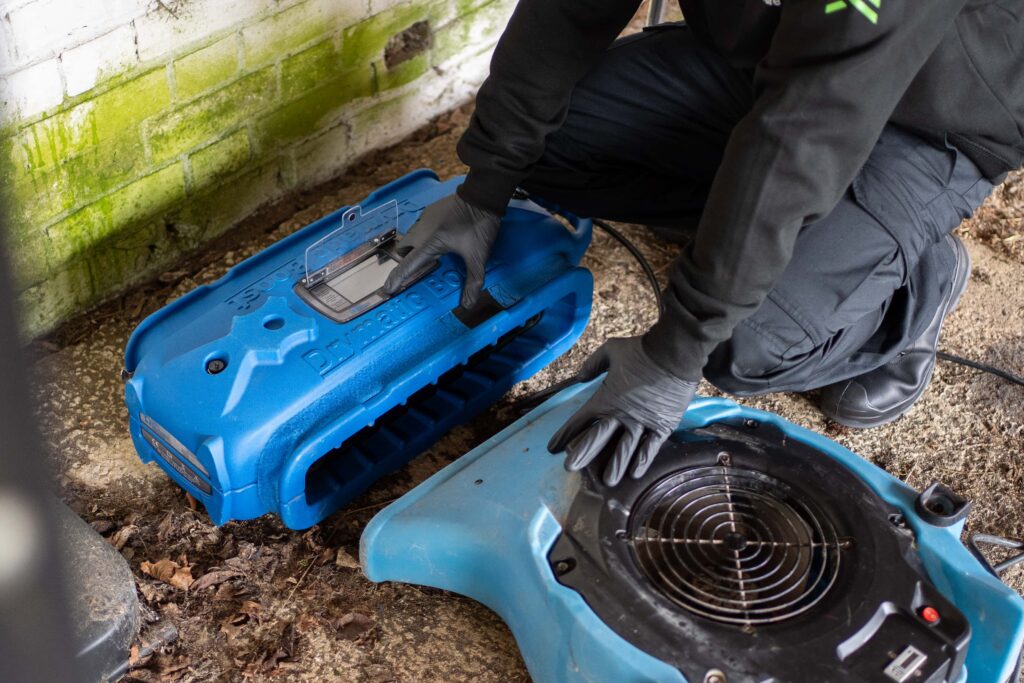
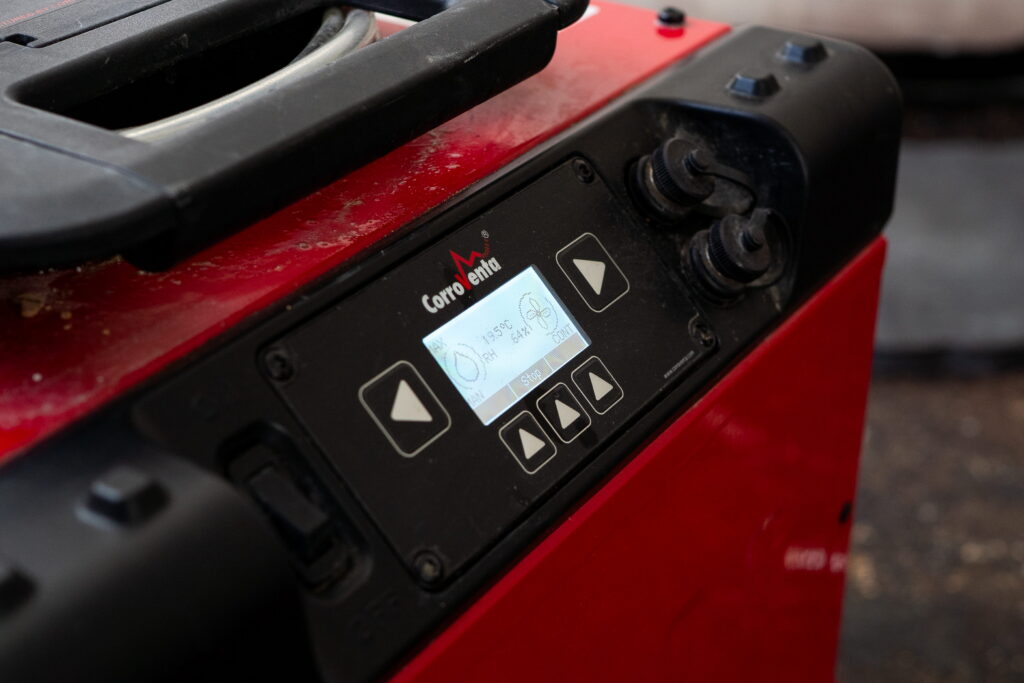
At Disaster Care, we take mould seriously.
Our IICRC certified Applied Microbial Restoration Technicians follow a structured, evidence-based process from initial assessment to final testing, and we do not consider the job complete until testing confirms the property is back within safe, normal levels.
Mould is almost always a symptom of a moisture problem. Treating the visible mould without addressing the underlying cause is not remediation. Our approach identifies both.
Contact Disaster Care to discuss your claim
Understanding Mould in Your Home
Mould grows where there is moisture, warmth, and a surface to grow on. In most domestic properties, it is a consequence of something else: a water leak that has not been fully dried, flood damage that has left residual moisture in the structure, or condensation from sustained damp conditions. It is not simply a cosmetic problem.
Mould produces spores that can affect air quality and, in some cases, health. The properties that matter in a mould assessment are not just what you can see on the surface but the moisture load in the air, the extent of surface coverage, and whether the conditions for mould growth have been properly addressed. Our technicians are trained to assess all of these.
Because mould is a symptom, the remediation process always begins with understanding the cause. A mould problem that is cleaned without addressing the underlying moisture source will return. We identify both, and we coordinate with the relevant part of the Disaster Care service, whether that is structural drying, water damage restoration, or leak detection, to make sure the whole problem is resolved.
How We Remove and Remediate Mould
Our mould remediation process follows IICRC standards throughout. Every stage is documented, and we do not sign off a job as complete until independent testing confirms the property has returned to normal fungal levels. This is not a clean-and-go service.
STEP ONE
01.
Assessment and Cause Identification
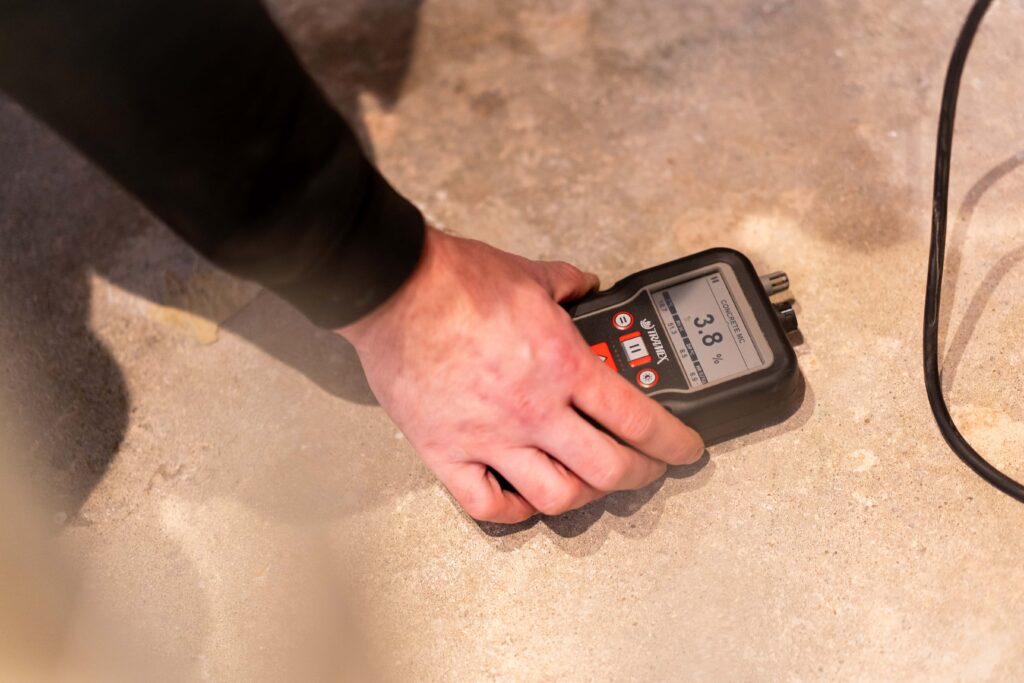
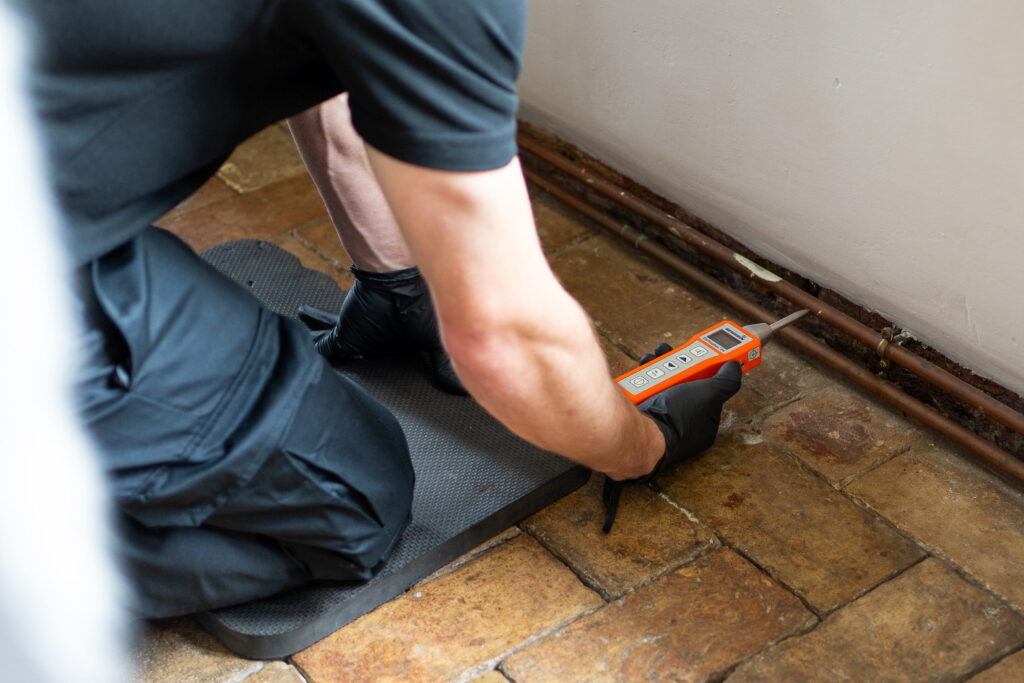
Our IICRC certified technician carries out a full assessment of the affected area, measuring moisture levels in the air and on surfaces, assessing the extent of mould coverage, and identifying the underlying moisture source. We use a scoring system to triage the situation and determine the appropriate level of intervention. We will explain what we find clearly before any work begins.
STEP TWO
02.
Containment
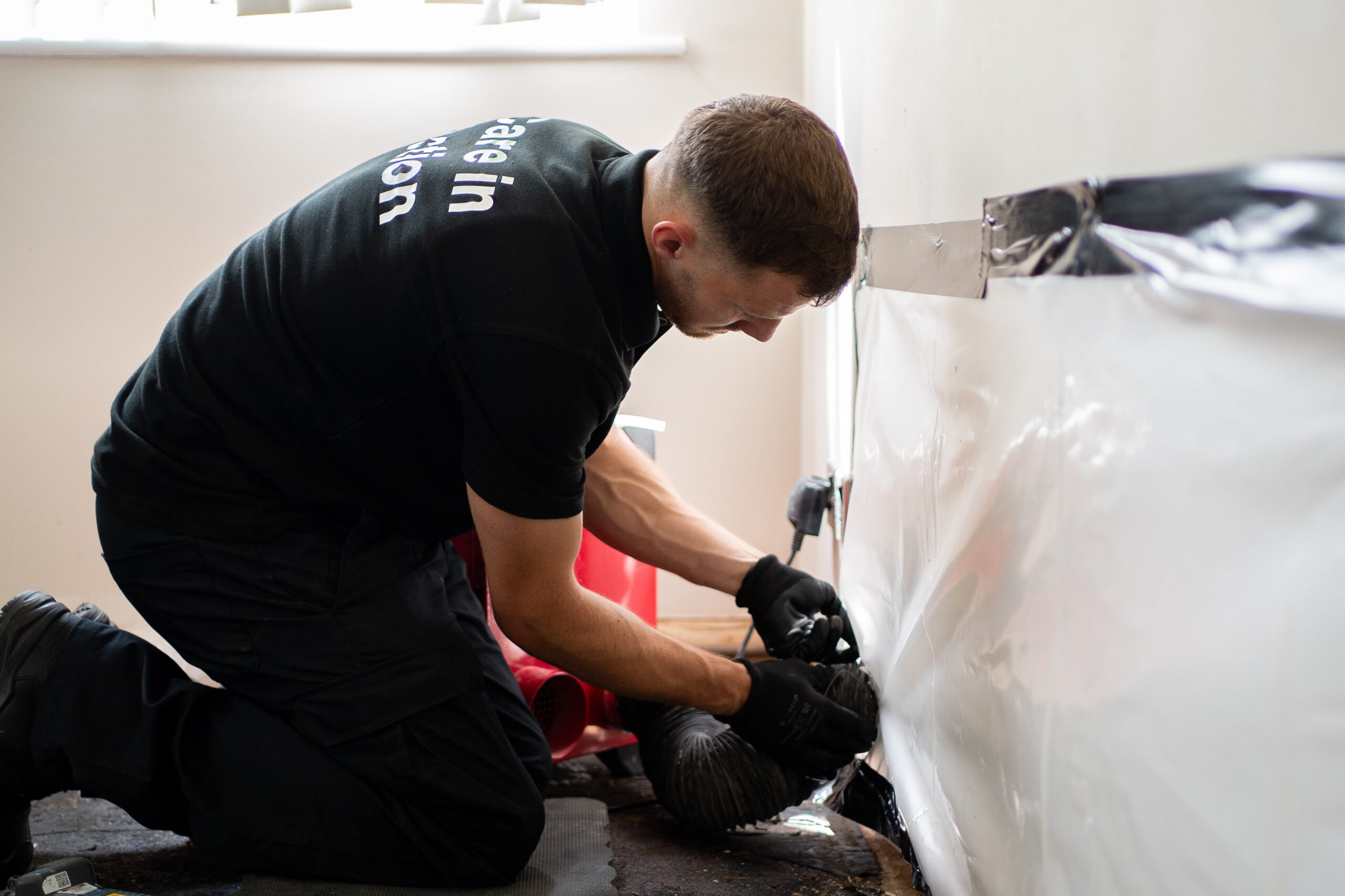
Before any cleaning begins, the affected area is isolated. We set up containment to prevent mould spores from becoming airborne and spreading to unaffected parts of the property. No drying equipment is placed in a room with active mould growth: doing so would push spores into the air and worsen contamination. Containment comes first.
STEP THREE
03.
HEPA Vacuuming and Surface Treatment
With the area contained and air filtration running, our technicians HEPA vacuum all affected surfaces to remove spores before any wet cleaning begins. This is a critical step: cleaning without HEPA vacuuming first risks spreading spores rather than removing them. Surfaces are then treated with an antimicrobial solution that kills remaining spores and cleans the affected area.
STEP FOUR
04.
Drying and Source Resolution
Once the mould has been treated, the underlying moisture source must be addressed. We coordinate the appropriate response: structural drying if residual moisture remains in walls or floors, water damage restoration if there is ongoing damage, or liaison with a leak detection specialist if the source has not yet been identified. Mould will return if the moisture that caused it is still present.
STEP FIVE
05.
Testing and Sign-Off
Once remediation and drying are complete, we carry out microbial testing to confirm the property has returned to normal fungal levels. We use surface sampling and, where appropriate, air testing, with results processed by an external laboratory. The job is not complete until testing confirms a satisfactory result. A full report is produced for your claims handler.
Why Professional Remediation Matters
Mould remediation is a regulated discipline for good reason. Disturbing mould without the right containment and equipment can spread spores to unaffected areas of a property, making a contained problem significantly worse. Household cleaning products are not formulated to eliminate mould at a structural level and do not address the airborne spore load that is often the more significant concern.
Our IICRC Applied Microbial Restoration Technician (AMRT) qualification is the industry standard for this work. It is taught at the National Flood School, which runs the course both for the Disaster Care network and for professionals from across the sector. It covers identification, assessment, containment, decontamination, and testing to a standard that insurers and loss adjusters can rely on.
Mould remediation is also becoming increasingly relevant in the context of Awaab’s Law, which introduces new statutory requirements around the investigation and remediation of damp and mould in rented and social housing. Our processes and standards align with the direction of travel in the sector.
Have Questions About Mould in Your Property?
Speak To a Remediation Specialist
Mould Removal and Remediation: Your Questions Answered
Is mould in my home dangerous?
Mould can affect air quality and, in some cases, may have health implications, particularly for people with respiratory conditions, allergies, or compromised immune systems. The risk depends on the type of mould, the extent of the problem, and the conditions in the property. We do not use this page to make health claims or diagnose health risk: if you have health concerns related to mould, speak to your GP. What we can tell you is that professional remediation will address the mould itself and test to confirm it has been eliminated.
Can I clean mould myself?
For very minor surface mould on non-porous surfaces, such as a small patch of mildew on a bathroom tile, domestic cleaning can be adequate. However, mould following a water damage event, or mould covering a significant surface area, or mould that has penetrated porous materials such as plasterboard, timber, or soft furnishings, requires professional treatment. Attempting to clean significant mould without proper containment can spread spores and make the problem worse.
Why does mould keep coming back after I clean it?
Because the underlying moisture source has not been addressed. Cleaning visible mould removes what you can see, but if the wall, floor, or structure behind it remains damp, mould growth will resume. Professional remediation identifies and addresses the moisture source as well as the visible contamination. If mould is recurring repeatedly in the same area, there is almost certainly an underlying moisture issue that needs to be found and resolved.
What is the IICRC AMRT qualification?
The IICRC Applied Microbial Restoration Technician (AMRT) qualification is the industry standard for professional mould assessment and remediation. It covers identification of mould types, moisture assessment, containment procedures, decontamination methods, and testing and sign-off. Every Disaster Care technician who carries out mould remediation holds this qualification, which is delivered through the National Flood School.
How do you know when the mould has been fully removed?
We test. Following remediation, we carry out microbial testing using surface sampling and, where appropriate, air sampling. Samples are sent to an external laboratory. The job is not signed off until results confirm the property has returned to normal background fungal levels. This is what distinguishes professional remediation from simply cleaning what you can see.
How long does mould remediation take?
This depends on the extent of the mould, the underlying moisture conditions, and whether structural drying is needed before or alongside the remediation. A straightforward mould treatment in a contained area may be completed within a day or two. Where significant structural drying is also required, the full process takes longer. We will give you an indication once the initial assessment has been carried out, and we will keep you informed throughout.
Mould Remediation Standards and Accreditations
Our mould remediation service is delivered to IICRC standards by qualified technicians, supported by documented processes, third-party testing, and full reporting to your claims handler.
- IICRC Applied Microbial Restoration Technician (AMRT): held by every Disaster Care technician carrying out mould remediation
- IICRC Water Restoration Technician (WRT): for the underlying water damage component present in most mould claims
- National Flood School: delivers IICRC AMRT training both internally and to external professionals across the sector
- Third-party laboratory testing: microbial sampling processed externally to confirm remediation outcomes
- CHAS and SafeContractor accreditation: health and safety compliance across the network
CONTACT US
Ready to Begin Your Recovery?
Related Services
Water Damage Restoration
Water Leak Detection
Building Restoration and Reinstatement