OUR SERVICES
Water Damage Restoration
If your home has been affected by a leak, flood, or escape of water, Disaster Care is here to help. As a specialist disaster recovery partner, we provide a complete water damage restoration service, from the moment we arrive to the point your home is back to normal.
Water damage can feel overwhelming, especially when it has affected multiple rooms, your belongings, or areas of the building that are hard to see.
Our role is to take care of everything, working quickly and carefully to assess the damage, start the drying process, and restore your home to its pre-loss condition.
Our trained specialists are IICRC certified in water restoration and structural drying, and draw on techniques and equipment developed at the National Flood School, the first facility in the UK approved to deliver IICRC Applied Structural Drying training.
Contact Disaster Care to discuss your claim
What Happens During Water Damage Restoration?
Every water damage situation is different. The cause, the extent, the building materials affected, and the length of time water has been present all influence how we approach the restoration. What does not change is how we work with you throughout: clearly, carefully, and with your home and your wellbeing at the centre of every decision.
STEP ONE
01.
Rapid Contact and Initial Assessment
When we arrive, we carry out a thorough assessment of your property, identifying the source of the water, the extent of the damage, and any immediate safety concerns such as electrical hazards or potential asbestos. We will explain everything we find and will not begin any work without your understanding and agreement.
STEP TWO
02.
Emergency Mitigation and Water Extraction
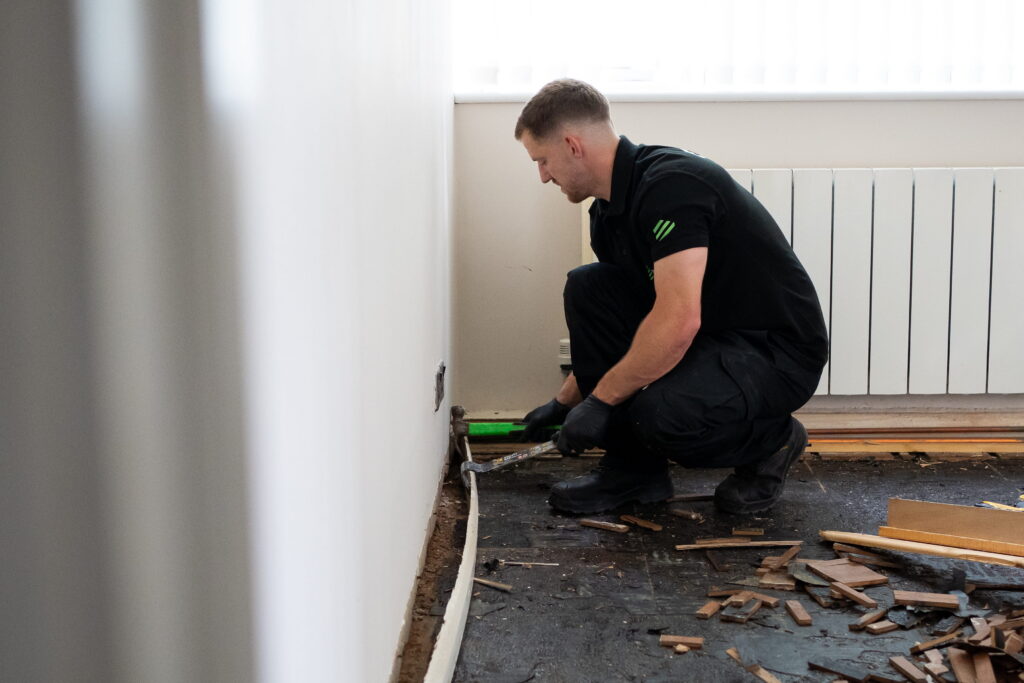
Where water is still present, we act quickly to extract it and prevent further damage. This may involve removing saturated carpets or soft furnishings, applying emergency drying measures, and making the property safe. Early intervention significantly reduces the overall extent of the damage and shortens the recovery period.
STEP THREE
03.
Structural Drying Programme
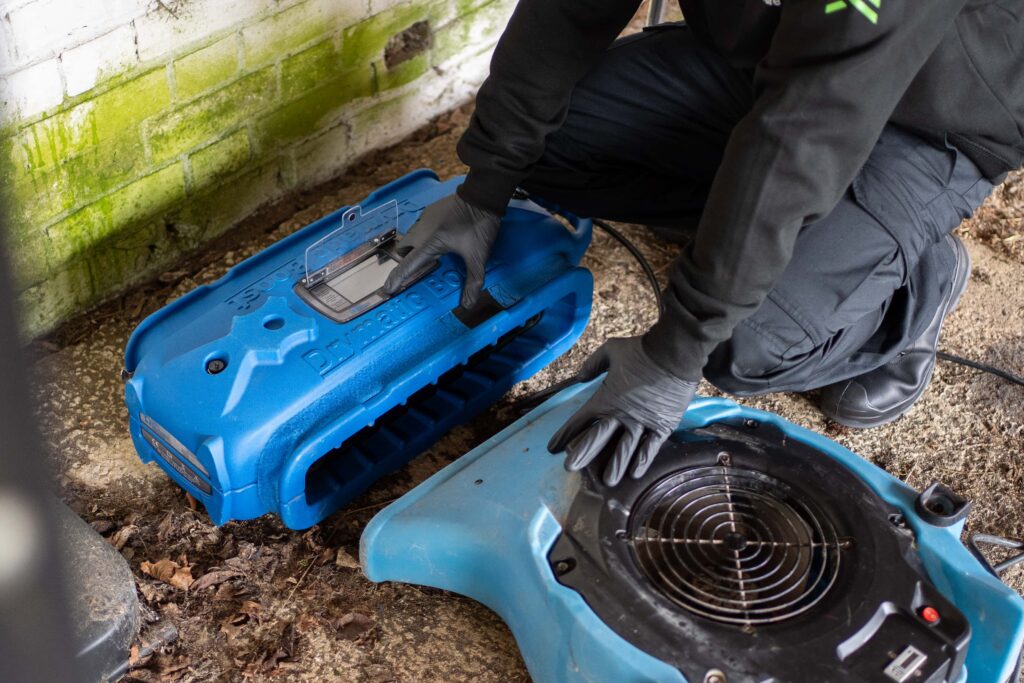
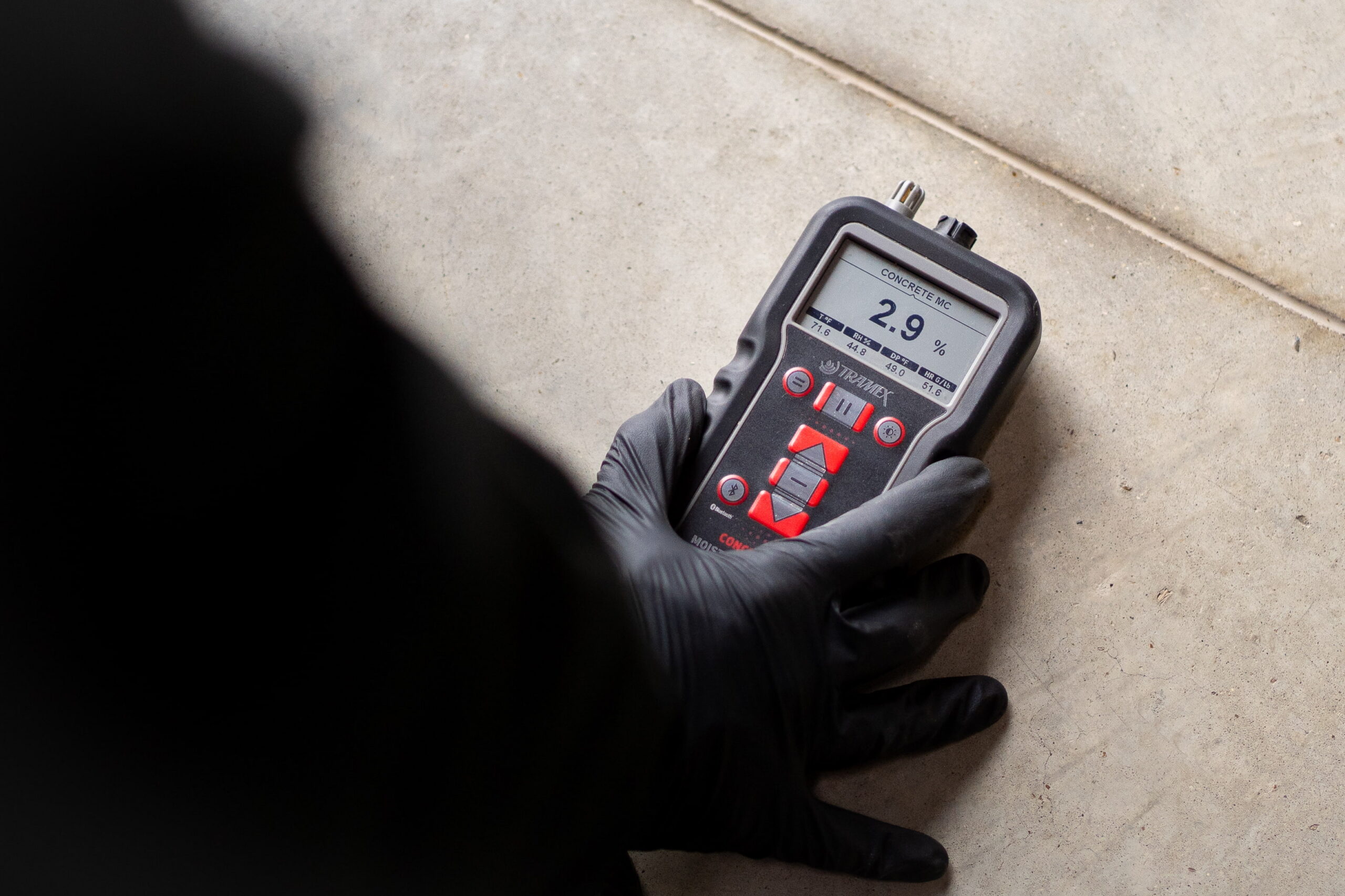
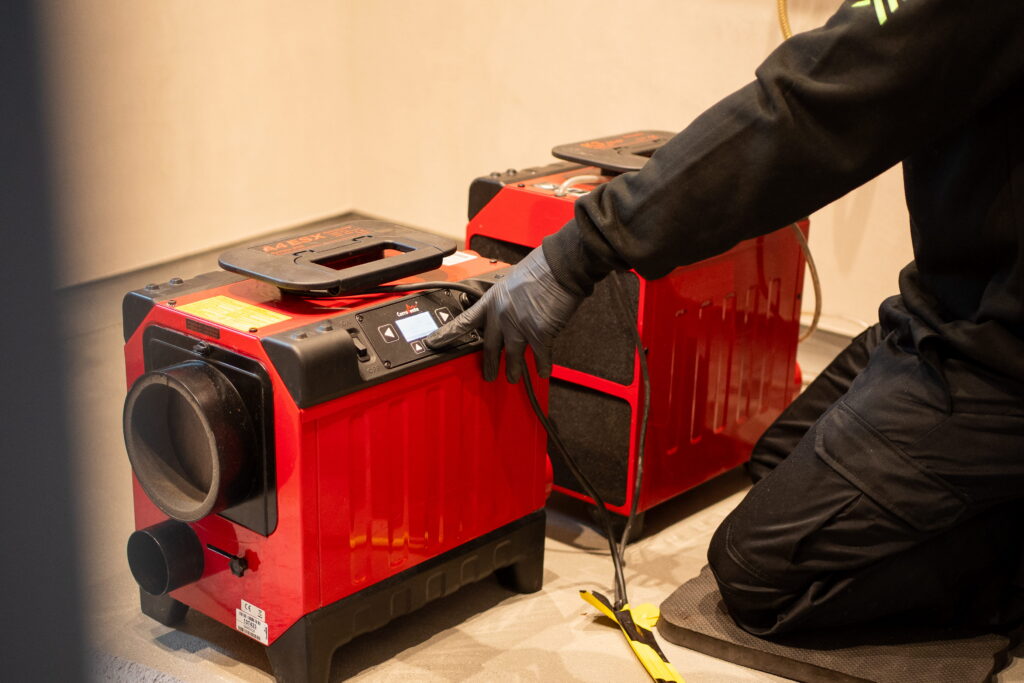
Using advanced drying equipment including condensing dehumidifiers, desiccant dehumidifiers, and air movement systems, we establish a drying programme tailored to your property. We use thermal imaging cameras and calibrated moisture metres to monitor progress precisely, with remote monitoring technology providing continuous readings so we can respond to changes without unnecessary site visits.
STEP FOUR
04.
Contents Care and Storage
We assess all contents affected by the water damage. Items that can be restored are carefully removed, cleaned, and stored securely. Items that are beyond repair are clearly documented for your insurer. Our specialist contents teams handle clothing, furniture, electronics, and personal belongings with the same care and precision as the building itself.
STEP FIVE
05.
Final Sign-Off and Handover
Once moisture readings confirm your property has returned to pre-loss condition, we carry out a final inspection and produce a full report. Where reinstatement works are needed, we coordinate the handover to the relevant contractors. We will walk you through everything before we leave, and we are available to answer any questions after the work is complete.
How We Approach Water Damage Restoration
Disaster Care invests in the most effective drying technology available, not because equipment alone makes the difference, but because the right equipment in the hands of trained specialists produces better outcomes for homeowners and shorter claim lifecycles for insurers.
One of the things that surprises many homeowners is that water damage is rarely limited to what you can see. Even when surfaces appear dry, moisture can persist deep within walls, floors, and structural materials, creating conditions for mould growth and long-term damage if not identified and treated correctly. Our technicians use thermal imaging cameras and calibrated moisture metres to find what is hidden, not just what is visible.
Our network uses a range of advanced drying systems including the Corroventa L4, one of the most energy-efficient combined condensing-desiccant units available. By using less equipment that works more effectively, we reduce energy consumption, reduce noise in your home, and in many cases reduce or eliminate the need for you to move into alternative accommodation.
Remote monitoring technology means we track drying progress continuously, giving you and your claims handler full visibility without requiring daily site visits. Everything is logged, evidenced, and reported.
Contact Us
Need Immediate Water Damage Restoration Support?
Water Damage Restoration: Your Questions Answered
How quickly should water damage be treated?
As quickly as possible. Water damage worsens rapidly: within hours, saturated materials begin to deteriorate and the conditions for mould growth develop. Within days, structural damage can become significantly more extensive.
What does the water damage restoration process involve?
It begins with a thorough assessment of your property to identify the source and extent of the water damage. From there, we extract standing water, begin structural drying using specialist equipment, monitor moisture levels throughout, and restore your property to its pre-loss condition. Where contents have been affected, our specialist teams handle those separately. The full process is coordinated with your Aviva claims handler throughout.
How long does the drying process take?
This depends on the extent of the damage, the building materials involved, and how long water has been present. A straightforward escape of water affecting one room may dry within a week to ten days. More extensive damage, particularly where walls, floors, or structural elements are saturated, can take longer. We work to complete the drying programme as efficiently as possible and will keep you informed of progress throughout.
Will I need to leave my home during restoration?
Not always. We use energy-efficient drying equipment designed to minimise noise and disruption, and in many cases homeowners are able to remain in their property throughout the process. Where damage is extensive or safety concerns are identified, your Aviva claims handler will discuss alternative accommodation options with you. Our approach is always to cause the least disruption possible.
What happens to my belongings?
Affected contents are assessed carefully. Items that can be restored are removed, cleaned by our specialist contents teams, and stored securely until your home is ready. Items that cannot be restored are documented thoroughly for your insurer. Our priority is always to restore rather than replace wherever possible.
What is the difference between a condensing and a desiccant dehumidifier?
A condensing dehumidifier extracts moisture from the air by cooling it. A desiccant dehumidifier uses a moisture-absorbing material to remove humidity. Both have different strengths depending on the temperature and the materials being dried. Our technicians are trained to select and deploy the right equipment for each specific situation, which is why IICRC Applied Structural Drying training matters.
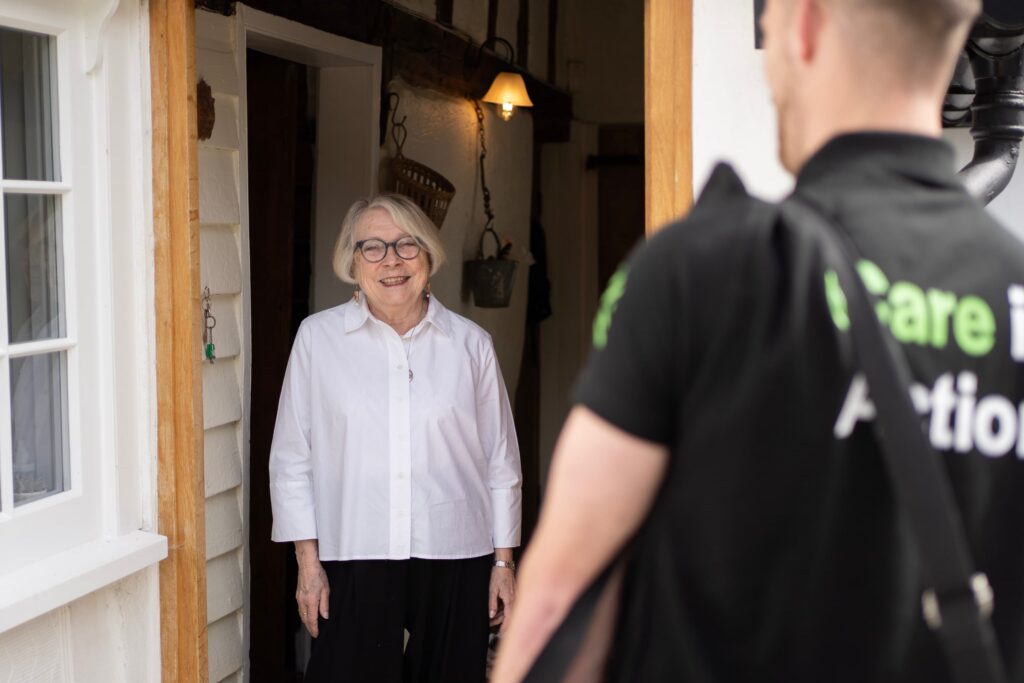
As soon as Disaster Care became involved in my insurance claim, they brought a massive human touch to a very upsetting and stressful time. My home was uninhabitable for six months due to significant water damage, but the team were efficient, friendly, reassuring and sensitive throughout. They collected, cleaned and safely stored my belongings, and their flexibility and support made a horrible experience far more manageable.”
Debbie H, Trustpilot
Contact Us
Experiencing Flooding or Water Damage?
Water Damage Restoration Standards and Accreditations
Our water damage restoration service is delivered to IICRC and BDMA standards by trained specialists who are certified, assessed, and supported by ongoing training at the National Flood School.
- IICRC Water Restoration Technician (WRT): the industry standard qualification for water damage assessment and mitigation
- IICRC Applied Structural Drying (ASD): advanced structural drying, delivered at the National Flood School, the first facility in the UK to be approved for this qualification
- BDMA (British Damage Management Association) Restoration Technician certification
- CHAS and SafeContractor accredited: health and safety compliance across the network
- Remote monitoring and reporting: full digital audit trail for every drying programme
Related Services
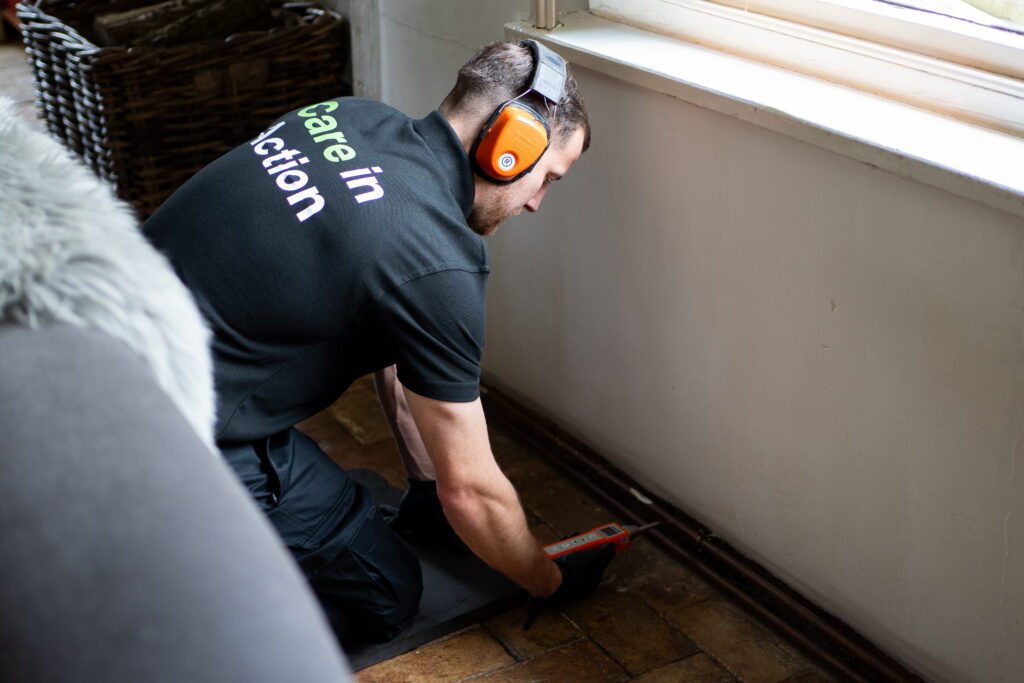
Water Leak Detection
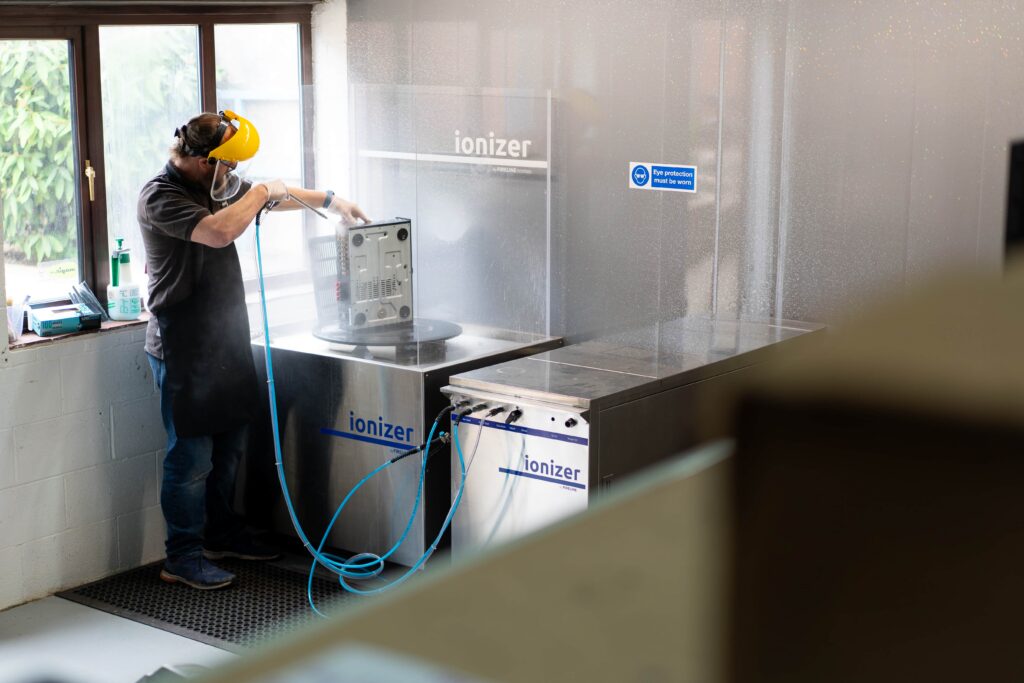
Contents Restoration
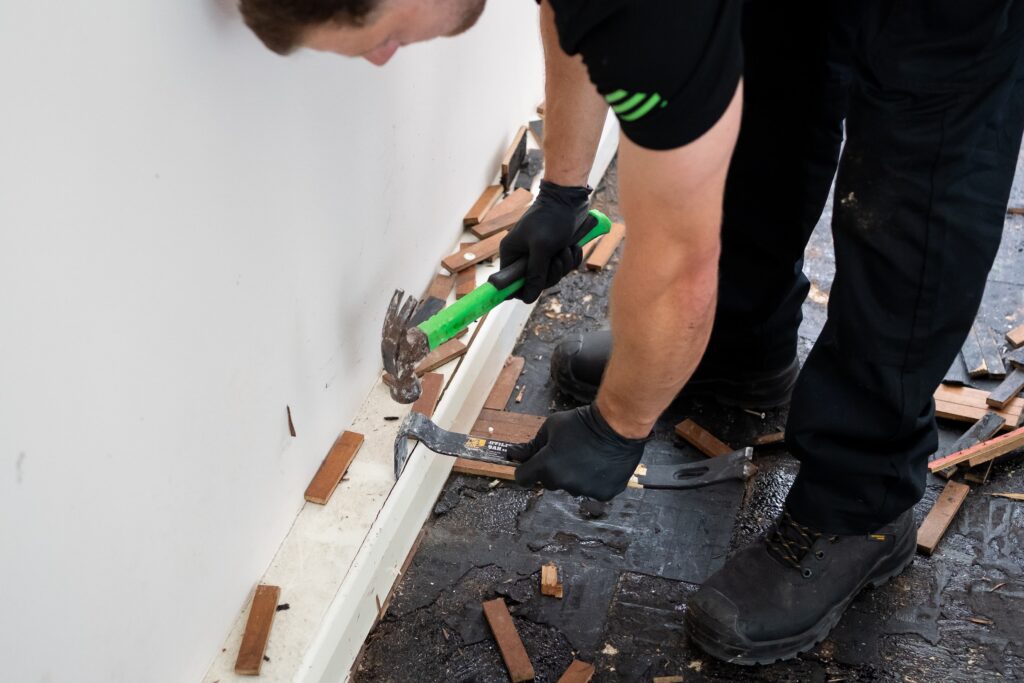
Building Restoration and Reinstatement